-
-
Your profile
-
-
-
This content has been machine translated dynamically.
Dieser Inhalt ist eine maschinelle Übersetzung, die dynamisch erstellt wurde. (Haftungsausschluss)
Cet article a été traduit automatiquement de manière dynamique. (Clause de non responsabilité)
Este artículo lo ha traducido una máquina de forma dinámica. (Aviso legal)
此内容已经过机器动态翻译。 放弃
このコンテンツは動的に機械翻訳されています。免責事項
이 콘텐츠는 동적으로 기계 번역되었습니다. 책임 부인
Este texto foi traduzido automaticamente. (Aviso legal)
Questo contenuto è stato tradotto dinamicamente con traduzione automatica.(Esclusione di responsabilità))
This article has been machine translated.
Dieser Artikel wurde maschinell übersetzt. (Haftungsausschluss)
Ce article a été traduit automatiquement. (Clause de non responsabilité)
Este artículo ha sido traducido automáticamente. (Aviso legal)
この記事は機械翻訳されています.免責事項
이 기사는 기계 번역되었습니다.책임 부인
Este artigo foi traduzido automaticamente.(Aviso legal)
这篇文章已经过机器翻译.放弃
Questo articolo è stato tradotto automaticamente.(Esclusione di responsabilità))
Translation failed!
Your profile
Setting up for the first time?
Set up your account walks through these four pages in order, as a guided first-run task. Use the pages below when you want the detail on a particular setting.
The Profile and Account Settings pages let you manage personal data and set preferences around your work habits. For example, you can set-up a work schedule such that your workspace is automatically deployed at pre-set hours.
The profile is used also to store any personal configuration files such as .bashrc, etc needed to customize your workspaces.
In addition, you can use the profile to record IDE configurations, including installed plug-ins, and replicate them across workspaces. Finally, the profile is the place to manage the different authentication tokens and access keys to authenticate to GIT applications attached to the platforms and accessible from the workspaces.
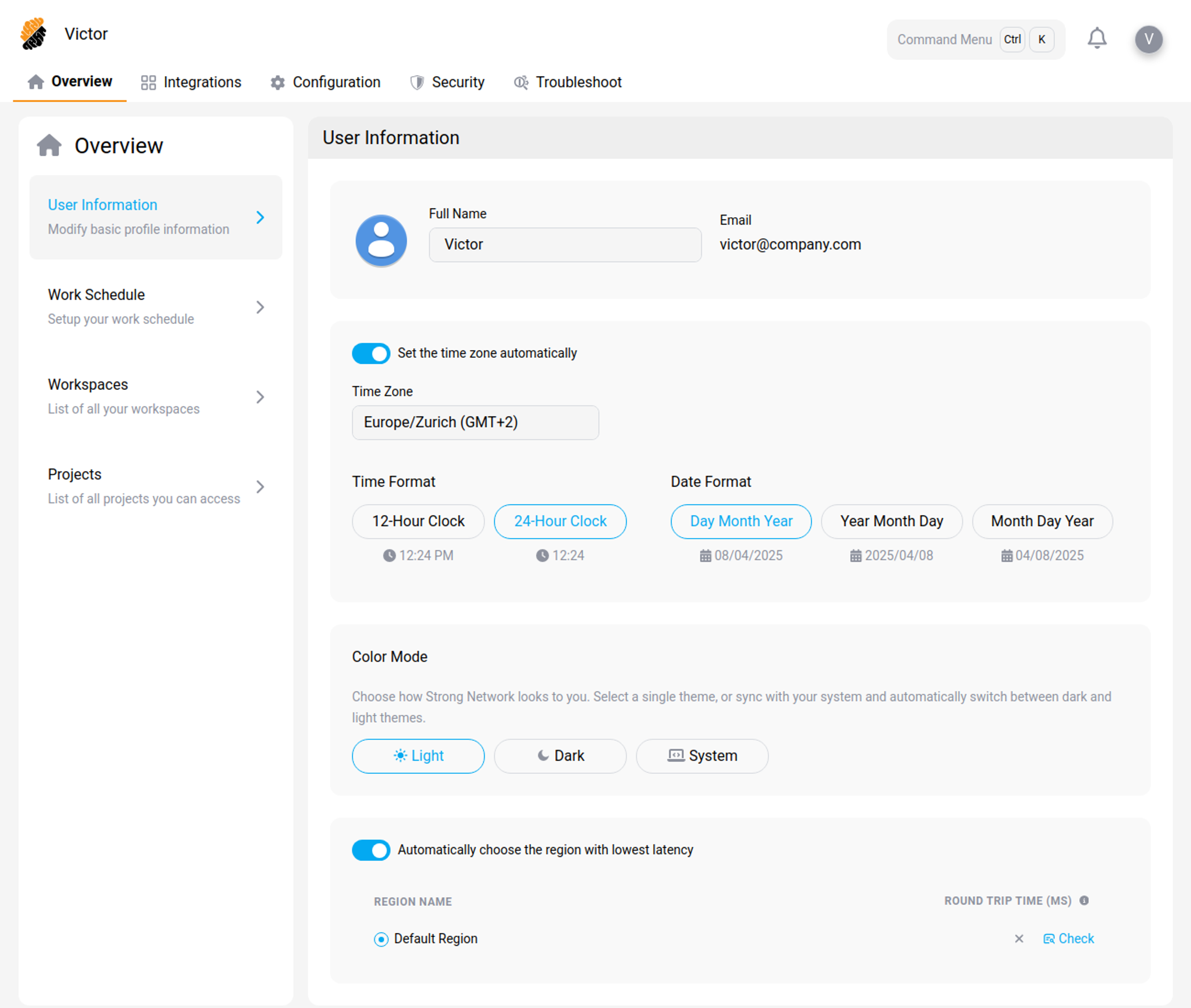
The Overview Page allows you to edit personal information, define a work schedule, view owned workspaces and project membership.
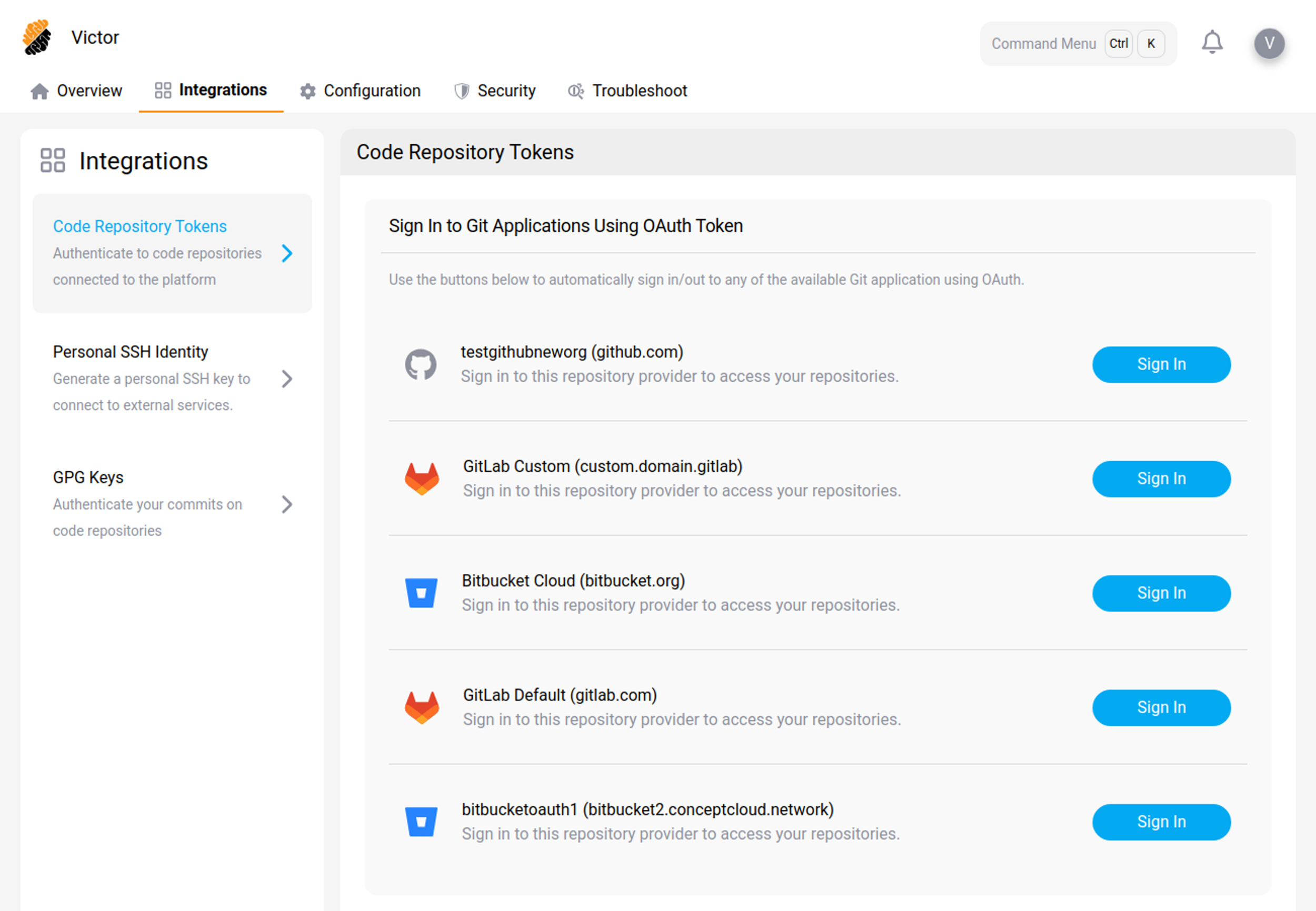
The Integration Page allows you to create and edit different authentication tokens, personal SSH identity, and GPG keys.
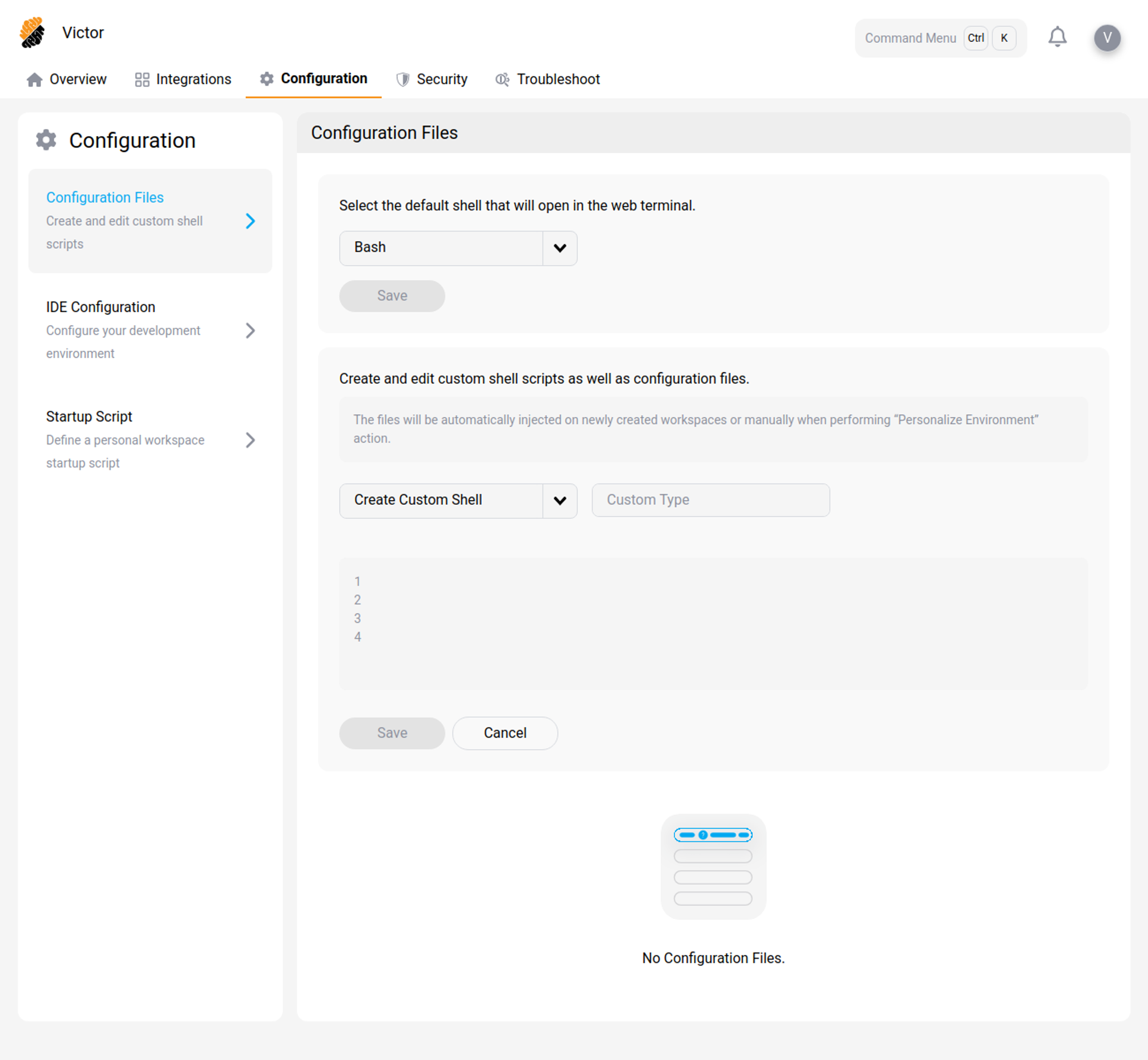
The Configuration Page allows you to create and edit custom configuration files, IDE configurations and workspace startup scripts.
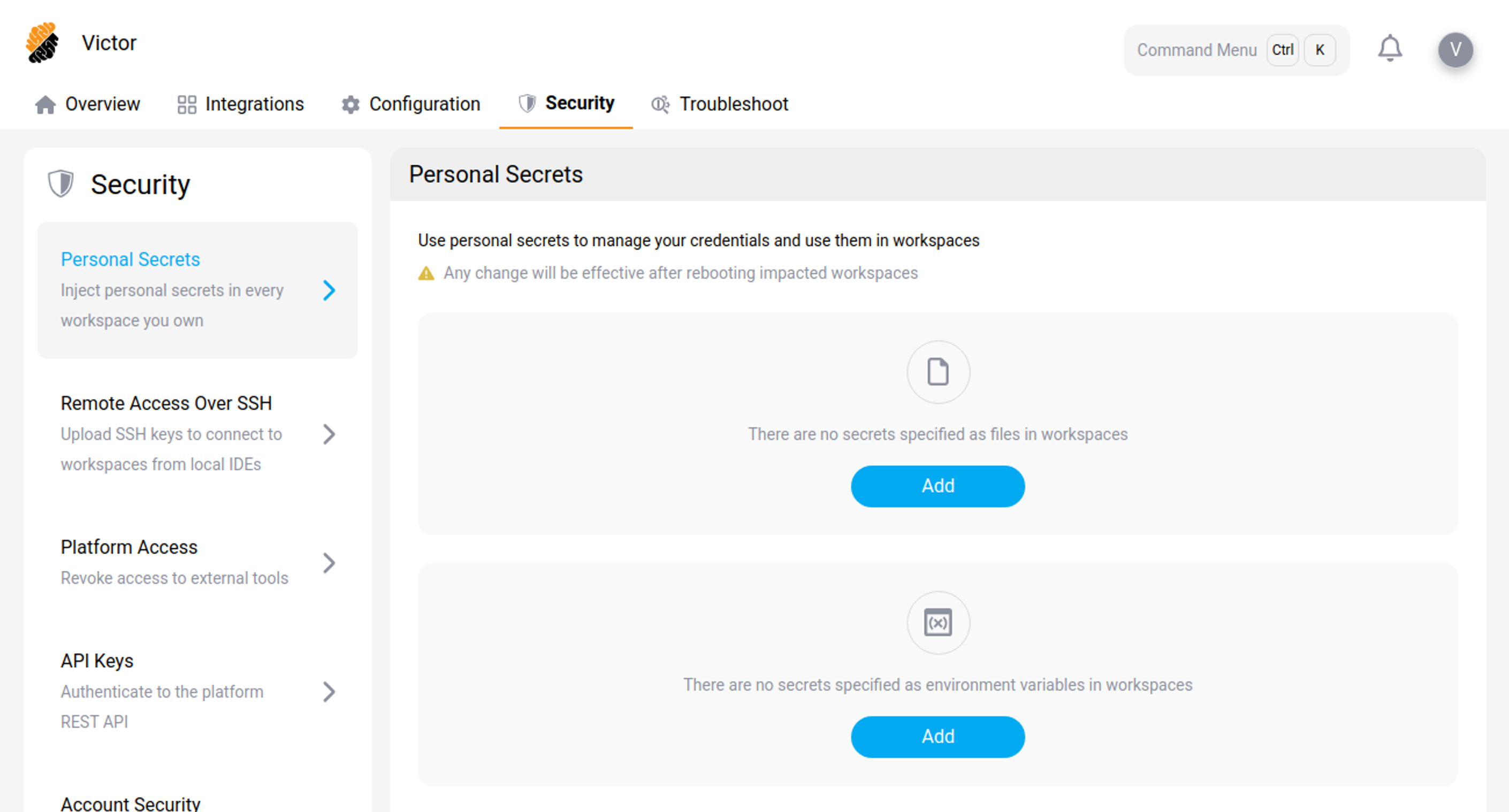
The Security Page allows you to create and edit API keys, SSH keys and personal secrets.
Account menu
Select your profile picture at the top right of the screen to open the account menu. Alongside the profile pages and the theme setting, the menu includes:
- REST API — the API specification for your deployment. See REST API.
- Documentation — this documentation set.
- What’s New — the SecurSpaces release notes, in a new browser tab.
- Your Organizations and Your Projects — the organizations and projects you belong to.
Content
- Overview Page
- Integration Page
- Configuration Page
- Security Page
- Troubleshoot — four diagnostic tools for the IDE connection, region latency, DNS, and network protocols
Share
Share
In this article
This Preview product documentation is Citrix Confidential.
You agree to hold this documentation confidential pursuant to the terms of your Citrix Beta/Tech Preview Agreement.
The development, release and timing of any features or functionality described in the Preview documentation remains at our sole discretion and are subject to change without notice or consultation.
The documentation is for informational purposes only and is not a commitment, promise or legal obligation to deliver any material, code or functionality and should not be relied upon in making Citrix product purchase decisions.
If you do not agree, select I DO NOT AGREE to exit.